

This is part of an ongoing series analysis analysing rule of law progress made in EU enlargement countries.
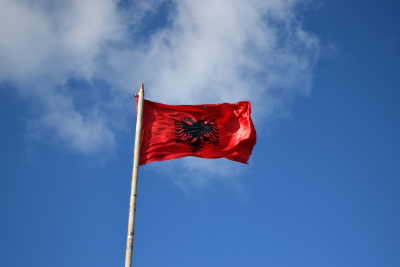
Albania opened EU-accession talks in July 2022 and completed screening in November 2023. Since October 2024 it has opened five of six clusters – including the Fundamentals cluster – with the final cluster having been opened in November 2025. The focus now is on meeting the interim benchmarks under the Fundamentals cluster.
Progress overview
| Category | 2025 Rule of Law report | Status |
| Corruption perceptions | In the 2024 Corruption Perceptions Index, Albania scores 42/100 and ranks 80th globally. | 🟡 |
| Anti-corruption strategies | A new 2024-2030 anti-corruption strategy targets high-risk sectors, but execution capacity, coordination, and monitoring are still lacking. | 🟡 |
| Strengthening the capacity of institutions and the legal framework to combat corruption | Some positive changes have been noted such as the extension of the Special Structure against Corruption and Organised Crime (SPAK) access to databases. The continuously increasing SPAK workload, and the insufficient staff and infrastructure still need to be addressed. | 🟡 |
| Track record for high level corruption | Tangible progress was made by SPAK towards a solid track record. | 🟢 |
| Fostering integrity in the public sector | The Police Oversight Agency stepped up its activities but the state police is still highly vulnerable to corruption. | 🟡 |
| Ensuring transparent lobbying and regulating revolving doors | Rules on revolving doors, conflicts of interest, lobbying[1], and party finance are still incomplete and fall short of EU standards. | 🟡 |
| Asset and interest disclosure | Declarations of assets and interests continued to be verified by the High Inspectorate for the Declaration and Audit of Assets and Conflicts of Interest (HIDAACI), but they remain unpublished, with access possible upon request which constitutes a shortcoming. | 🟡 |
| Whistleblower protection | The number of whistleblowers reports continued to be low. | 🟡 |
| Addressing areas at high risk of corruption | Public procurement lacks transparency, and state funds are still misused in campaigns. | 🟡 |
Key: Green: Good progress; Yellow: Limited progress; Red: No progress.
1. Snapshot
Ongoing judicial reform implementation: A positive development in this area is the adoption of the revised Cross-Sector Justice Strategy 2024-2030. Furthermore, notable progress has been achieved in enhancing accountability, specifically through the finalisation of the vetting process for all judges in first instance.
Transparency of media ownership and independence issue: Concerns persist regarding high concentration within the media environment and a lack of transparency in media ownership. Public service media, in particular, struggles with independence, highlighted by irregularities in the January 2025 election of a new Director General for the Albanian Public Broadcaster (RTSH)[2].
Attacks against journalists: There has been a concerning rise in attacks targeting journalists, with incidents increasing from 24 in 2024 to 45 in 2025[3]. Additionally, online harassment cases have doubled since 2022, reaching 19 cases in 2025.
2. What has changed from 2024 to 2025? Highlights
- Step forward
The implementation of the judicial map, initially adopted in 2022 and based on the European Commission for the Efficiency of Justice (CEPEJ) tools, has been finalised. This initiative reduced the total number of courts nationwide. The completion of this implementation is positive, as the 2024 Rule of Law Report had previously highlighted the absence of an implementation plan. However, lawyers and other stakeholders have heavily criticised the new judicial map, which cuts the number of courts from 22 to 13, arguing it will hinder citizens’ access to justice[4].
SPAK has demonstrated significant progress in the fight against corruption, despite facing some political and media pressure. This progress is attributed to improved access to databases, a better track record, increased human, technical, and financial capacity and rising public trust in the institution.
Progress has been made in mitigating the risk of political influence in the Audiovisual Media Authority (AMA) nominations, but is it still categorised as “high risk” by the Media Pluralism Monitor (MPM).
- Biggest decline/concern
Political influence continues to undermine judicial independence, particularly through public and institutional pressure on SPAK and other judicial bodies in politically sensitive corruption cases. Although Albania’s justice reform has strengthened prosecutorial autonomy and improved the resilience of judicial institutions, attempts by public officials and politicians to exert undue interference remain a serious concern. This can be illustrated by recent (February 2026) proposed legal changes to prevent ministers from being suspended while under criminal investigation, which prompted further criticism that the government was seeking to shield senior officials and weaken judicial independence.
- Civil society
Civic space remains under pressure. In early 2025, civil society organisations reported an unprecedented campaign of disinformation, defamation, and politically motivated public attacks against them by public officials. Further exacerbating this, the main governmental strategic document designed to support civil society expired in 2023, with a new strategic framework still pending. In parallel, donor withdrawal has narrowed funding opportunities, putting the sustainability and continuity of programmes at risk.
3. Integrity System comparison
| Issue | NIS finding score | Commission Narrative | Blind spot |
| Vetting of judges and prosecutors for integrity | “There have also been controversies in the vetting process, with some judges dismissed for minor breaches and others confirmed despite evidence of improper contacts or unexplained assets.” | “The vetting process of all judges and prosecutors was finalised in first instance, further strengthening accountability (…) Effective judicial follow up remains to be observed” | Abuses in the disciplinary procedures |
| Legal framework for conflicts of interest | “The anticorruption agency has supported the approval of a new law for preventing conflicts of interest since 2021, but as of July 2023, this has yet to be approved by the Assembly, despite GRECO’s deadline of December 2022 (…) Despite 14 conflicts of interest declared by MPs since 2017, CSOs suspect more cases exist without official acknowledgement.” | “(…) further work is still needed as to fully align the laws on whistleblower protection, lobbying, donations and political party financing with European standards. The number of whistleblowers reports continued to be low.” | Issues regarding conflict-of-interest legislation and track record |
| Lobbying | “(…) The Code of Conduct for MPs also outlines rules for disclosing contacts with lobbyists. However, the register of meetings is not publicly available online and is updated only irregularly.” | “The regulation of revolving doors, conflicts of interests, lobbying and political party financing remained incomplete.” | Meetings register is not transparent |
| Pressure on voters | “Reports from OSCE/ODIHR on these elections highlighted the misuse of state resources at both central and local levels, including claims of pressure on public sector workers and voters” | The misuse of state funding during electoral campaigns remains an area of concern, despite the initiatives undertaken by the Central Electoral Commission to monitor and sanction violations including corruption, in relation to the legislative elections of 11 May 2025 | Misuse of state funding during electoral campaigns is mentioned but voting pressures are not covered |
| Public procurement | “In Albania (…), there has also been overuse of negotiated procedures without publication of a procurement plan. Such gaps in transparency exacerbate the risk of favouritism in public procurement procedures” | Limited transparency in public procurement procedures, especially for public-private partnerships, remain a source of concern | Lack of procurement plans |
4. Spotlight Issue – fundamentals cluster
Chapter 23 – Judiciary and Fundamental Rights
Media freedom remains structurally fragile
The lack of transparency and accountability in media ownership remains a serious concern in Albania. The media market continues to be highly concentrated, with some of the most influential private outlets controlled by a small number of companies and business groups with links to the political sphere. Reporters Without Borders[5] note that much of the Albanian media landscape is concentrated in the hands of just four or five companies, while opaque funding models and close ties between media ownership, business and politics continue to undermine pluralism and editorial independence.
The Media Pluralism Monitor[6] continues to identify serious structural risks in this area. Market plurality remains the most problematic dimension, while transparency of media ownership continues to be treated as a high-risk issue. Although the Albanian Audiovisual Media Authority (AMA) has taken a limited step forward by publishing summary information online on ownership structures and beneficial owners of licensed audiovisual media, this has not resolved the wider concerns about effective public scrutiny or the lack of sufficient safeguards against excessive market dominance.
Accountability is further weakened by the lack of transparency around media financing and the distribution of state resources. The legal framework still does not adequately regulate indirect subsidies or state advertising to media, nor does it ensure full transparency regarding vested interests, conflicts of interest, or possible influence over media owners.
Judicial efficiency is weak
Albania still has very low High Judicial Council (HJC) and High Prosecutorial Council (HPC) efficiency in appointments, promotions and evaluations, weak statistical quality, insufficient School of Magistrates intake, and slow roll-out of the electronic case-management system. Although the High Judicial Council adopted a ‘Roadmap of efficiency’ in June 2025, and initial implementation steps have begun, key elements remain incomplete, including a comprehensive human resources analysis, full backlog reduction planning, and the finalisation of unified judicial statistics rules. Further, pressure by public officials and politicians on judicial bodies has increased, which makes post-vetting sustainability a core weakness.
Corruption enforcement needs to be improved
While SPAK has strengthened its capacity and results, the broader system remains weak: referrals from other institutions are too low, the General Prosecution Office and state police still underperform, police vulnerability to corruption remains high, and HIDAACI’s verification of assets and interests still lacks sufficient effectiveness and transparency. HIDAACI has recently introduced an online platform for the publication of asset declarations, but so far only around 400 declarations – approximately 10% of the total – have been made public. The gap is in prevention and system-wide enforcement.
Chapter 24 – Justice, Freedom and Security
Fight against organised crime and money laundering
Albania has made good progress in strengthening the fight against money laundering, particularly through the adoption of the 2024–2030 Anti-Money Laundering and Counter-Terrorist Financing Strategy, increased prioritisation of financial investigations by SPAK, and stronger cooperation with international partners. The creation of the Asset Recovery Office, alongside the reinforcement of the Agency for the Administration of Seized and Confiscated Assets, are also positive steps. However, implementation remains crucial: the new strategy still needs to be applied effectively across all relevant institutions, the full functionality of the Asset Recovery Office is not yet proven, recruitment of additional judicial police officers is still pending, and the overall level of seizures and confiscations has remained broadly stable rather than improving. The reuse of confiscated assets for social purposes also remains largely ineffective.
Visa policy and Schengen still not aligned with EU Acquis
Albania still maintains visa-free regimes with some countries that are on the EU visa-required list, while screening of third-country nationals entering visa-free still needs strengthening. Albania’s visa policy is still unaligned with the EU acquis.
Sources:
European Commission – Enlargement Package 2024 – Albania Report
European Commission – Enlargement Package 2025 – Albania Report
European Commission – Rule of Law Report 2024 – Country Chapter Albania
European Commission – Rule of Law Report 2025 – Country Chapter Albania
Institute for Democracy and Mediation (IDM) – National Integrity System Assessment – Albania 2023
Institute for Democracy and Mediation (IDM) – IDM Reform Agenda Snapshot
European Movement in Albania (November 2025) – Scorecard for Political Criteria
European Movement in Albania (November 2025) – Scorecard for Chapter 23 (Judiciary and Fundamental Rights)
European Movement in Albania (November 2025) – Scorecard for Chapter 24 (Justice, Freedom, Security)
Transparency International Secretariat – Between anti-corruption reform and decline: Examining key actors, strengths and weaknesses in the Western Balkans and Türkiye’s national integrity systems (2024)
Centre for Media Pluralism and Media Freedom – Albania Media Pluralism Monitor 2025 results
[1] Albania adopted a law on lobbying in 2026.
[2] The disqualification of candidates even before the interview stage and irregularities in the secret ballot procedure by the Steering Committee jeopardised the nomination process. As a result, the Albanian Parliament discharged the Steering Committee.
[3] These figures were recorded during the European Commission’s reporting period
[4] https://balkaninsight.com/2022/07/21/albania-approves-new-judiciary-map-despite-lawyers-opposition/
[5] https://rsf.org/en/country/albania
[6] https://cmpf.eui.eu/country/albania/